
Dual Geopolitical and Logistical Crises Intensify Pressure on Fuel Oil Markets
Global fuel oil markets are contending with significant challenges stemming from a diplomatic deadlock over key shipping chokepoints and severe logistical disruptions in Europe, leading to pronounced price volatility and inventory shifts, according to a recent report from Alkagesta.
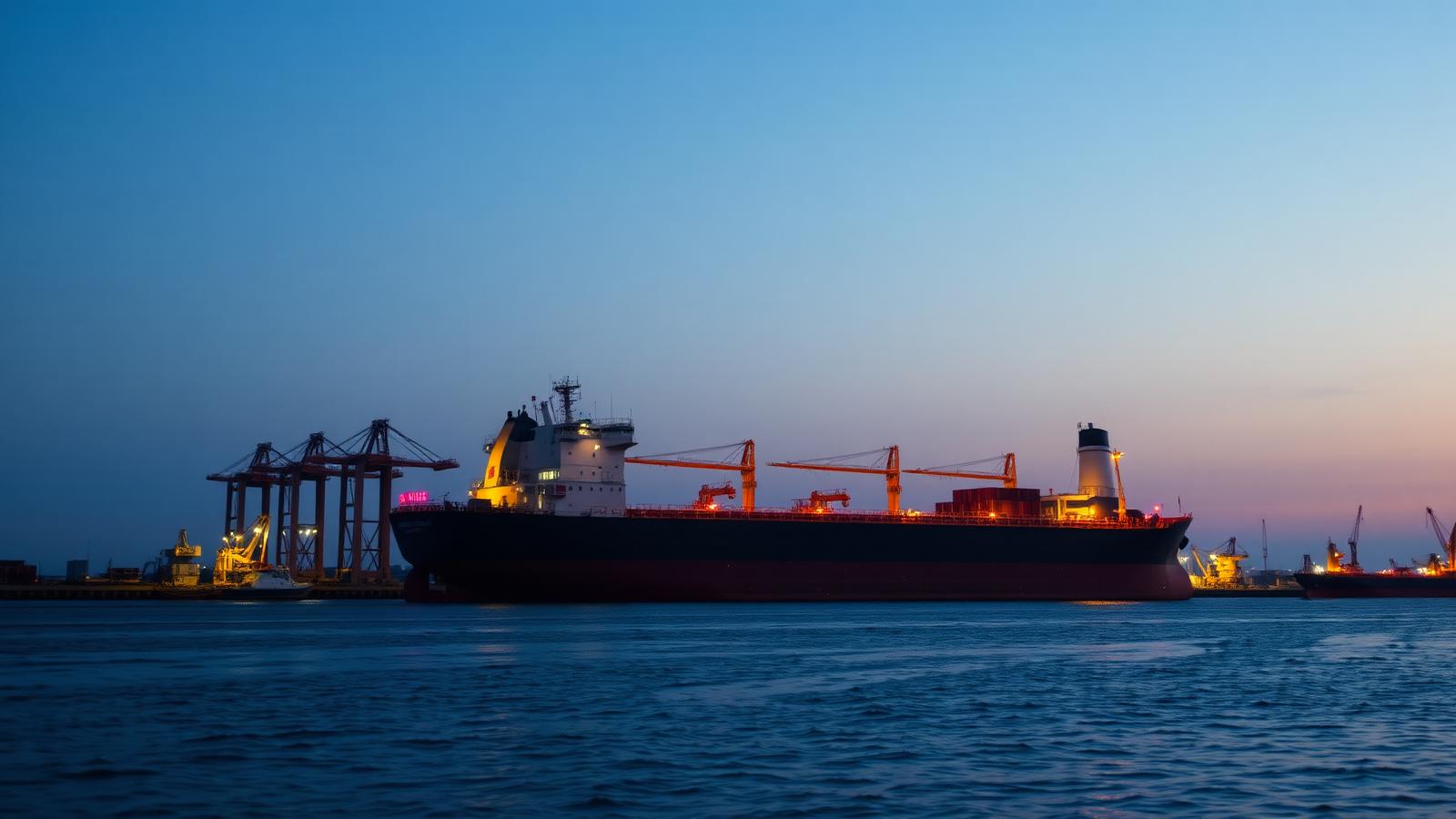
Global fuel oil markets are navigating a complex landscape marked by a confluence of geopolitical tensions and severe logistical bottlenecks, as detailed in an August 2026 market update from Alkagesta. A diplomatic impasse regarding the Strait of Hormuz, with both the United States and Iran seeking war reparations, has significantly curtailed shipping traffic. This situation is compounded by a dramatic reduction in Bab al-Mandab transits, reflecting a broad disruption to critical maritime routes.
Simultaneously, inland European logistics have reached a critical state. Water levels on the Rhine River at the Kaub chokepoint plummeted to just 16 cm by August 10, with projections indicating a further decline to 4 cm by August 14. Such levels effectively halt barge operations, resulting in substantial volumes of fuel oil becoming stranded in the Amsterdam-Rotterdam-Antwerp (ARA) hub. These dual pressures represent a marked escalation from conditions identified in Alkagesta’s July market analysis, which had already highlighted the re-establishment of naval blockades and initial deterioration of Rhine water levels.
Market Developments and Price Shifts
Recent weeks have seen considerable volatility in crude and fuel oil prices. ICE October Brent futures experienced sharp fluctuations, initially dropping over 5% to $79.36/b following rumors of a resolution, then recovering to $83.55/b as negotiations stalled. Physical crude markets, particularly Dubai, demonstrated robust performance, with the Platts cash Dubai differential surging to a $7.49/b premium over futures, spurred by renewed supply concerns after an incident involving a cargo ship near Oman. In Singapore, physical fuel oil values registered notable weekly gains, with FOB Singapore 380 CST HSFO reaching $554.26/mt and 0.5% Marine Fuel climbing to $743.76/mt. The benchmark 380 CST HSFO premium in Singapore also saw a substantial increase, reaching a multi-week high of $24.08/mt, buoyed by strong bidding from major players like Chimbusco and PetroChina.
Inventory levels have reflected these market dynamics. Fuel oil stocks in the ARA hub jumped nearly 25% to 707,000 mt, marking the largest increase in six weeks, as Rhine transport limitations trapped product at the coast. Conversely, Fujairah’s heavy distillate stocks rose by 8.6% to 3.787 million barrels, the first increase in a month, coinciding with a period of slightly reduced regional tensions and increased refinery output. The Singapore Hi-5 spread (VLSFO vs. HSFO) hit a multi-year high of $225.93/mt, indicating a severe structural deficit of low-sulfur blending components relative to high-sulfur fuel oil.
Supply and Demand Analysis
In Singapore, fuel oil inflows shifted significantly, with Middle Eastern imports nearly tripling to 328,878 mt, primarily from Iraq, Saudi Arabia, and the UAE, providing crucial relief to the hub. This led to an 8% increase in onshore heavy distillate stocks to a five-week high of 19.58 million barrels. Despite this, outflows plummeted 57.4% to a more than one-year low, with shipments to China seeing a substantial drop. Demand side analysis indicated a 3.7% month-over-month decrease in July bunker fuel sales in Singapore, as elevated premiums redirected prompt bunker inquiries to alternative ports like Zhoushan and Port Klang. Alkagesta’s Mithat Çiftçioğlu noted that the ongoing closure of Hormuz means fuel access, rather than oil prices, poses the primary risk to global shipping.
Northwest European HSFO supplies remain healthy due to an open arbitrage window from the Americas, with significant volumes expected from Venezuela, Colombia, and Mexico. However, VLSFO supplies are notably constrained as refiners prioritize high-margin diesel production over fuel oil blending components, exacerbated by a sourer crude slate in the Mediterranean limiting low-sulfur output. Inland European supply is critical, with barges at Kaub forced to reduce loads to only 15-20% capacity due to record-low water levels, a situation first flagged as a structural risk in Alkagesta’s European Gasoil Market report. This refinery yield dynamic, where refiners favor diesel over jet fuel, further limits low-sulfur blending components across the region, as outlined in Alkagesta’s June European Jet Market report.
Strategic Outlook
Looking ahead, Alkagesta’s outlook suggests several key trends. The scarcity of VLSFO components is expected to persist, driven by the global shift towards sourer crude slates and high diesel cracks, likely keeping Singapore Hi-5 spreads above $200/mt through Q3. The ongoing geopolitical stalemate between the US and Iran could push crude prices towards $100/b, as analysts project a need for an additional 2.1 million b/d for 18 months to replenish inventories, maintaining elevated prompt prices and a structural deficit through late 2026. Furthermore, a total breakdown in Rhine-linked inland distribution is anticipated by mid-August, potentially creating a significant disconnect between Northwest and Central/Eastern Europe, leading to steeper backwardation in barge prices and depressed ARA coastal values due to product oversupply.
Full details of this update are available in the original Alkagesta report.
Related topics
- geopolitical risks
- Rhine river levels
- shipping chokepoints
- VLSFO supply
- crude price volatility
- ARA inventories
Sourcing & attribution
Reported with reference to Alkagesta. View original report
This article is an original Atlas summary produced under our editorial policy with AI drafting assistance and human editorial review. Spotted an error? Request a correction.

Elena Marchetti
Elena Marchetti covers commodity and energy market structure, benchmarks and trade flows for Atlas Commodity Group. She edits the publication's daily market intelligence coverage.