Etu Energias Acquires Increased Stakes in Angolan Deepwater Blocks from Chevron Subsidiary
The Angolan energy firm has finalized a substantial transaction to expand its holdings in two key offshore concessions, potentially impacting operational control.

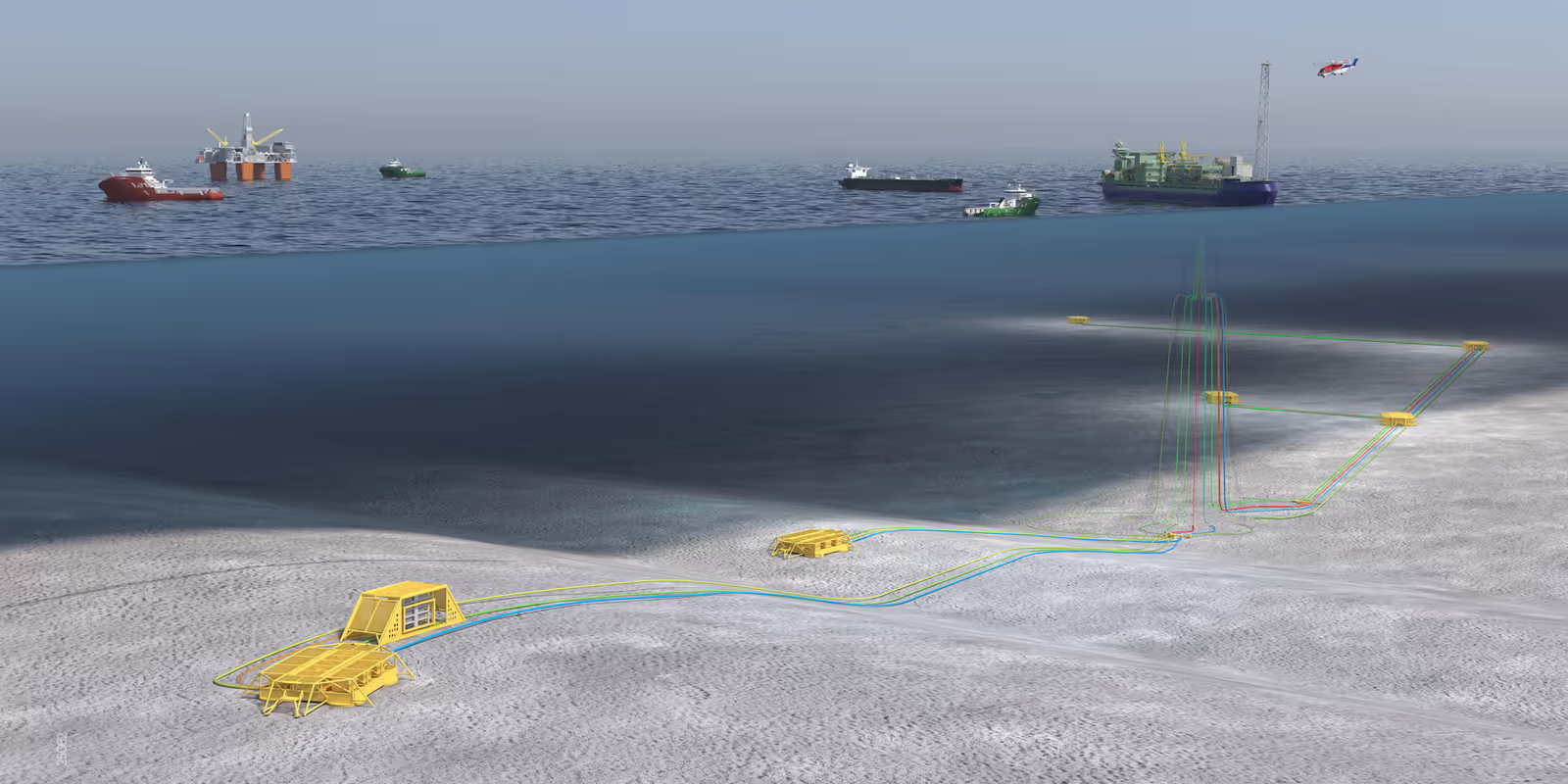
Etu Energias, an Angolan energy company, has concluded an agreement to acquire additional interests in two deepwater blocks located offshore Angola. The transaction involves Cabinda Gulf Oil Company (CABGOC), a subsidiary of the US-headquartered energy major Chevron. This acquisition is poised to enhance Etu Energias' position within the Angolan deepwater sector.
The deal, valued at $260 million, focuses on Blocks 14 and 14K. These blocks represent some of Angola's longest-producing deepwater assets, contributing significantly to the nation's energy output. The increased stake will position Etu Energias as the largest interest holder in Block 14K.
Transaction Details and Strategic Implications
Under the terms of the agreement, Etu Energias will boost its non-operated working interest in Block 14 to 20%. Previously, the company held a 10% stake in this concession. Block 14 has been in continuous production since 1999 and is currently operated by CABGOC.
Concurrently, Etu Energias will raise its working interest in Block 14K to 25%, an increase from its prior 10% holding. Block 14K began production in 2007. The firm's expanded share in this block establishes it as the primary interest holder.
This transaction could also lead to a change in operatorship for Block 14K. The agreement includes provisions that could see Etu Energias assume the role of operator for this deepwater asset. Such a transition would mark a significant development in the operational landscape of Angola's offshore energy sector.
Etu Energias' acquisition aligns with the broader trend of national and regional energy companies increasing their participation and operational influence in established oil and gas producing regions. These types of agreements often reflect strategic portfolio adjustments by international majors and growth initiatives by local entities.
What it means
For commodity traders and shipowners, this transaction signifies a notable shift in ownership and potential operational control within Angola's deepwater oil production landscape. Increased local participation could influence future investment decisions, operational efficiencies, and the long-term supply outlook from these established fields. Any changes in operatorship, particularly for a producing asset, could present new logistical and contracting opportunities or adjustments for service providers and shipping companies involved in Angolan crude exports.
Sourcing & attribution
Reported with reference to Offshore Energy. View original report
This article is an original Atlas summary produced under our editorial policy with AI drafting assistance and human editorial review. Spotted an error? Request a correction.

Elena Marchetti
Elena Marchetti covers commodity and energy market structure, benchmarks and trade flows for Atlas Commodity Group. She edits the publication's daily market intelligence coverage.