
Sasol Reports 9% Earnings Increase Amidst Market Conditions
South African energy and chemical company Sasol has announced a 9% rise in its latest earnings report, attributed to prevailing higher oil prices and an increase in fuel sales volumes.
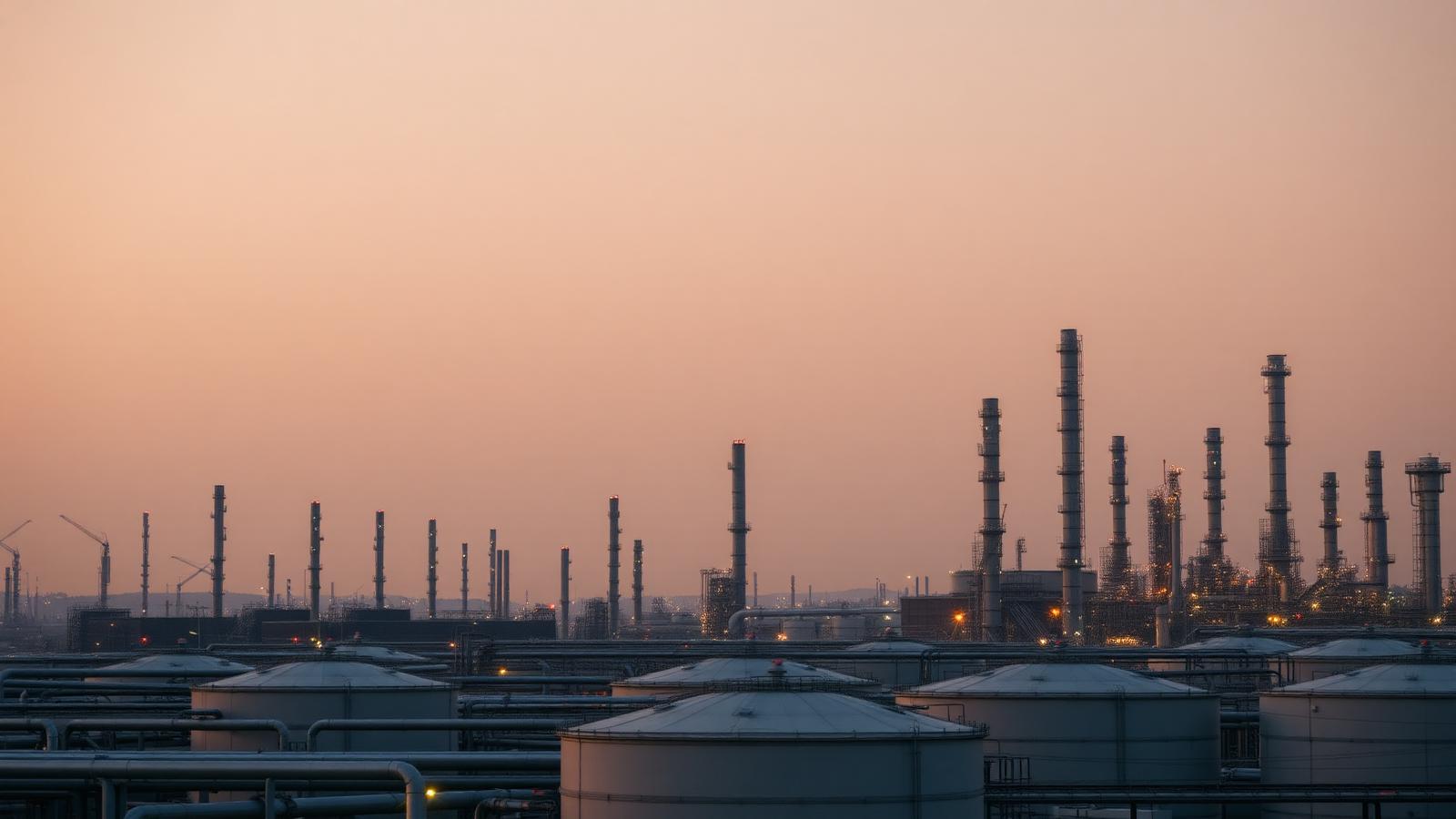
Sasol, a prominent integrated energy and chemical concern based in South Africa, has reported a 9% increment in its recent earnings figures. This growth reflects a period of notable market activity and operational performance for the multinational entity. The company's financial results underscore its positioning within the global commodity landscape, particularly concerning energy markets.
The reported earnings uplift is primarily driven by two key factors: a favorable environment of elevated oil prices and a concurrent expansion in the volume of fuel products sold. These elements collectively contributed to the company's improved financial standing during the reporting period, indicating robust demand and advantageous pricing conditions for its core offerings.
Sasol's operations span various segments, including fuel production, chemical manufacturing, and exploration activities. The interplay of these divisions contributes to the company's overall revenue streams. The recent performance highlights the significance of its fuel business within its broader portfolio, benefiting from market dynamics.
Market Dynamics and Sales Performance
The global oil market has experienced periods of price volatility and upward trends, impacting producers and refiners worldwide. For companies like Sasol, whose revenue streams are intrinsically linked to crude oil benchmarks, higher prices can translate directly into improved profitability, assuming stable or increased production costs.
In conjunction with the commodity price environment, Sasol observed an increase in its fuel sales volumes. This surge in sales indicates a potential recovery in demand or an expansion of market share within its operational territories. Enhanced sales volumes, when paired with favorable pricing, create a synergistic effect on the company's financial performance.
This development aligns with broader trends observed in the energy sector, where both supply-side economics and demand-side consumption patterns influence financial outcomes. Sasol's ability to capitalize on both aspects — higher prices and increased sales — points to effective market navigation and operational efficiency during the reporting cycle.
The company's integrated value chain, from coal-to-liquids (CTL) and gas-to-liquids (GTL) processes to refining and chemical production, positions it uniquely. Performance metrics such as earnings growth are critical indicators for stakeholders, reflecting the effectiveness of strategic initiatives and responsiveness to market conditions.
Outlook for Energy and Chemical Sectors
The sustained performance of energy companies often hinges on a delicate balance between global commodity prices, production costs, and market demand. Sasol's recent results provide a snapshot of its capacity to generate value within the current economic framework, particularly benefiting from a strengthened energy market.
The interplay between crude oil prices and the demand for refined products like fuel remains a central theme for the industry. Companies that can optimize their production and sales strategies in response to these dynamics are better positioned for financial resilience and growth in a competitive global market.
What it means
For commodity traders, Sasol's reported earnings increase, driven by higher oil prices and fuel sales volumes, signals robust demand and a supportive pricing environment within the energy sector. This indicates potential continued strength in the crude oil and refined products markets. Shipowners may observe this as a potential indicator of sustained fuel demand, which could influence bunkering prices and availability, reflecting broader market activity in key regions.
Related topics
- oil prices
- fuel sales volumes
- energy sector
- commodity markets
- South Africa
Sourcing & attribution
Reported with reference to Reuters. View original report
This article is an original Atlas summary produced under our editorial policy with AI drafting assistance and human editorial review. Spotted an error? Request a correction.

Elena Marchetti
Elena Marchetti covers commodity and energy market structure, benchmarks and trade flows for Atlas Commodity Group. She edits the publication's daily market intelligence coverage.